
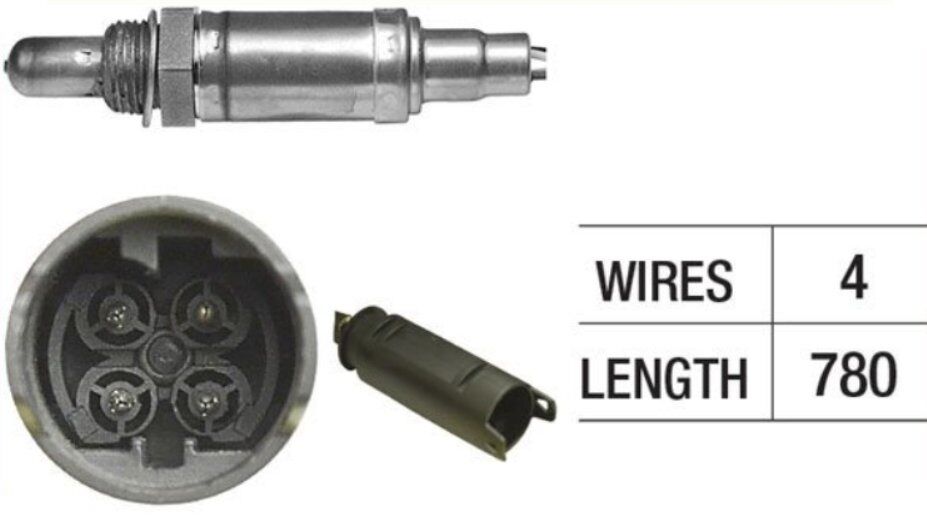
Description
The OX619 Oxygen Sensor is a replacement option listed for selected BMW 316i, 318Ci, 318i, 320i and 323Ci vehicles across the E36 and E46 platforms from 1999 to 2001. The stated application range includes compatible petrol engines with capacities from 1.9 to 2.5 litres and inline four-cylinder or inline six-cylinder configurations.
An oxygen sensor, also known as an O2 sensor or lambda sensor, is an important component of the engine management and emissions control systems. It measures the oxygen content in the exhaust gases and sends an electrical signal to the engine control unit (ECU). The ECU uses this information, together with readings from other engine sensors, to help regulate the air-fuel mixture under appropriate operating conditions.
A properly functioning oxygen sensor can support consistent engine operation, effective fuel control and emissions monitoring. Over time, however, exposure to high exhaust temperatures, vibration and combustion by-products can affect sensor performance. A worn or faulty sensor may contribute to increased fuel consumption, an illuminated check engine light, rough idling or emissions-related problems.
The OX619 is intended for buyers seeking a replacement oxygen sensor for a compatible BMW application. As BMW used different engines, exhaust configurations and sensor arrangements across these models, confirming the precise vehicle specification is essential before ordering.
Vehicle Compatibility
The supplied application details for this listing are:
- Product: Oxygen Sensor
- Product Code: OX619
- Vehicle Make: BMW
- Listed Models: 316i, 318Ci, 318i, 320i and 323Ci
- Vehicle Platforms: E36 – E46
- Model Years: 1999–2001
- Body Styles: 2-door and 4-door, depending on model
- Listed Engine Capacity: 1.9–2.5 litres
- Engine Configurations: Inline four-cylinder (I4) and inline six-cylinder (I6)
- Listed Valve Range: 8–24 valves
These details are a fitment guide and do not guarantee that the same sensor fits every listed vehicle. Specifications may differ according to production date, engine code, market, emissions equipment and original sensor design.
Important fitment note: Before purchasing, verify the vehicle identification number (VIN), exact engine code and original equipment (OE) part number. Check the connector, cable length and sensor position. An upstream oxygen sensor, located before the catalytic converter, may have different specifications from a downstream sensor located after it. Always compare the required part with the original sensor or the vehicle’s service information.
The Function of an Oxygen Sensor
An oxygen sensor measures the amount of oxygen remaining in the exhaust stream and provides feedback to the ECU. When the engine is operating in closed-loop fuel-control mode, the ECU uses this information to help adjust fuel delivery and maintain the intended air-fuel mixture.
This feedback works alongside other engine-management inputs, including airflow, engine temperature and operating load. Depending on the vehicle’s exhaust design, an oxygen sensor may support fuel regulation or monitor catalytic converter performance.
A correctly matched and functioning oxygen sensor supports several important functions:
- Air-fuel mixture control: Provides information the ECU uses to make fuel-delivery adjustments.
- Engine operation: Helps maintain consistent combustion when the engine and related systems are functioning correctly.
- Fuel efficiency: Supports appropriate fuel control under applicable driving conditions.
- Emissions management: Contributes to the vehicle’s designed exhaust emissions-control strategy.
- Catalytic converter monitoring: A downstream sensor may help the ECU evaluate catalytic converter operation.
- Fault detection: Abnormal readings or circuit problems may trigger diagnostic trouble codes.
The exact function of the OX619 depends on its intended location and the engine-management system fitted to the specific BMW.
Common Symptoms of a Faulty Oxygen Sensor
Oxygen sensors can gradually lose performance or develop faults because of contamination, heat exposure, ageing or electrical damage. Possible symptoms include:
- Check engine light: The ECU may detect a sensor circuit, response or performance problem.
- Increased fuel consumption: Incorrect readings can interfere with fuel-mixture adjustments.
- Rough or uneven idling: A sensor-related fuel-control issue may affect engine smoothness.
- Hesitation during acceleration: Engine response may be affected by an engine-management fault.
- Unusual exhaust odour: A rich-running condition may produce a noticeable fuel smell.
- Higher exhaust emissions: Faulty feedback or another engine problem may increase emissions.
- Emissions inspection failure: A sensor-related issue may contribute to an unsuccessful test.
These symptoms do not automatically confirm oxygen-sensor failure. Vacuum leaks, exhaust leaks, ignition faults, fuel-injection problems, airflow-sensor issues and damaged wiring can cause similar concerns. Diagnostic trouble codes and live sensor data should be checked before replacing the component.
Features and Benefits
The OX619 is listed as a replacement option for compatible BMW applications.
- Replacement maintenance option: Intended for use when the original oxygen sensor has been diagnosed as defective or has deteriorated.
- Engine-management support: Supplies exhaust oxygen information when correctly matched and operating as intended.
- Fuel-control assistance: Supports the ECU in making appropriate air-fuel adjustments under relevant conditions.
- Emissions-system support: Contributes to the vehicle’s exhaust monitoring and emissions-control functions.
- Diagnostic repair potential: May help resolve sensor-related trouble codes when testing confirms that the sensor is the cause.
- Application-focused identification: The OX619 code helps buyers identify the listed replacement for fitment checking.
- Routine servicing suitability: Can be considered during maintenance or repairs involving the exhaust and engine-management systems.
Actual results depend on correct fitment, vehicle condition and the underlying cause of the original fault. Replacing an oxygen sensor alone will not repair unrelated mechanical, ignition, fuel-delivery or electrical problems.
Installation Recommendations
Oxygen sensors are fitted to the exhaust system, where temperatures can become extremely high. Allow the exhaust to cool completely before beginning installation. If you are unfamiliar with exhaust-system repairs, professional installation is recommended.
- Scan the vehicle for diagnostic trouble codes and consult the relevant service information.
- Confirm the required OE part number and the sensor’s upstream or downstream position.
- Switch off the ignition and allow the exhaust to cool.
- Disconnect the electrical connector carefully to avoid damaging the plug or wiring.
- Remove the old sensor using the appropriate oxygen-sensor tool.
- Compare the replacement with the original, checking the connector, cable length, thread and sensor design.
- Install the replacement according to the manufacturer’s torque specifications and instructions.
- Route the cable away from hot exhaust parts and moving components.
- Reconnect the electrical plug securely and inspect the installation.
- Clear fault codes where appropriate, then check for warning lights and returning faults after installation.
Do not apply additional thread compound unless the sensor manufacturer’s instructions permit it. Some sensors have pre-treated threads. Avoid overtightening the sensor or twisting its wiring, as this may cause damage.
Maintenance and Purchase Advice
Regular servicing and prompt diagnosis help maintain dependable engine operation. If the check engine light appears, investigate the stored codes and related systems rather than assuming the oxygen sensor is responsible.
Oil or coolant contamination, exhaust leaks, excessive fuelling and damaged wiring can affect sensor performance or shorten its service life. Correcting these underlying problems is important when replacing a defective sensor.
Before purchasing the OX619, verify the exact BMW model, production date, VIN, engine code, OE part number, connector and sensor position. The listed 1999–2001 year range and 1.9–2.5-litre engine range should be checked against the specific vehicle.


Reviews
There are no reviews yet.