
Description
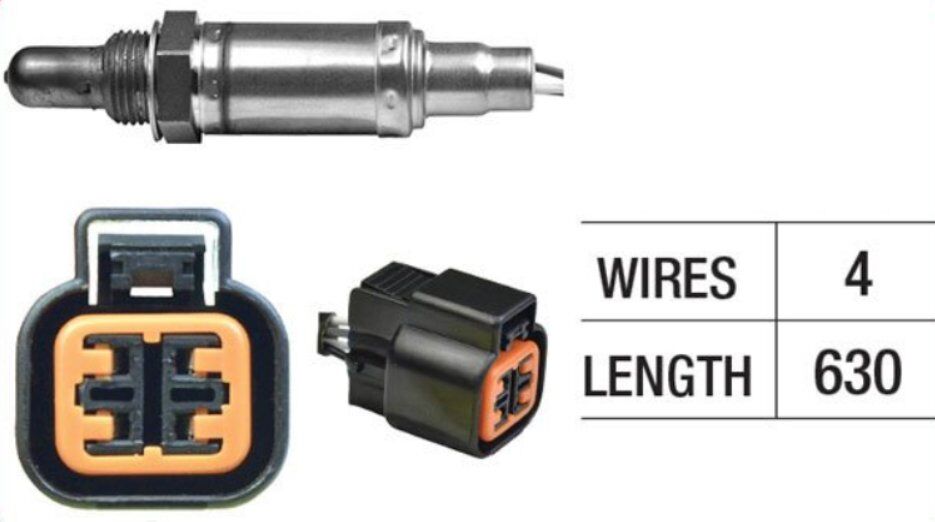
Maintain your vehicle’s engine-management performance with the OX583 Oxygen Sensor, listed for selected Mitsubishi Triton MH, MJ, and K36 applications from 1990 to 1997, featuring a 3.0-litre V6 12-valve engine. The oxygen sensor is an important component of the engine management and emissions-control systems. It measures the oxygen content in the exhaust gases and supplies information that helps the engine control unit (ECU) regulate the air-fuel mixture where applicable.
A properly functioning oxygen sensor helps the engine management system maintain suitable fuel delivery under different operating conditions. When the sensor becomes worn, contaminated, or electrically faulty, it may provide inaccurate readings. This can contribute to increased fuel consumption, uneven engine operation, higher exhaust emissions, or an illuminated engine warning light.
The OX583 listing is intended for customers seeking a replacement oxygen sensor for a compatible Mitsubishi Triton application. Before purchasing, it is important to confirm the vehicle’s exact engine specification, original equipment (OE) part number, sensor location, connector configuration, and emissions requirements. These checks are especially important for older vehicles, where specifications may vary according to market, production date, and previous repairs.
Product Details
- Product Name: Oxygen Sensor
- Product Code: OX583
- Vehicle Make: Mitsubishi
- Vehicle Model: Triton
- Listed Series: MH-MJ-K36
- Listed Model Years: 1990–1997
- Body Style: 2-door to 4-door applications, subject to verification
- Engine Capacity: 3.0 litres
- Engine Configuration: V6
- Valve Configuration: 12-valve
- Primary Function: Exhaust oxygen monitoring and engine-management feedback
Vehicle compatibility must be verified against the VIN, engine code, and original sensor specification before ordering.
Understanding the Role of an Oxygen Sensor
An oxygen sensor, also known as an O2 sensor or lambda sensor, monitors the oxygen content of the exhaust gases. Its signal helps the engine management system assess combustion and adjust the air-fuel mixture when the vehicle’s control system uses oxygen-sensor feedback.
An appropriate air-fuel mixture is important for efficient combustion, smooth operation, and emissions control. If the sensor provides an incorrect signal, the ECU may not receive reliable information for its fuel-management calculations. The effect on vehicle performance depends on the type of sensor, the nature of the fault, and the design of the engine-management system.
Depending on the engine and exhaust arrangement, a vehicle may have one or more oxygen sensors. An upstream sensor is generally located before the catalytic converter and commonly contributes to fuel-mixture control. A downstream sensor, where fitted, is usually located after the catalytic converter and helps monitor emissions-system performance.
Sensor position and specification are important because oxygen sensors are not always interchangeable. They can differ in thread size, connector design, wire length, heating requirements, and electrical characteristics. For this reason, the OX583 code should be checked against the required OE part number and intended location rather than selected by vehicle model alone.
Common Symptoms of a Faulty Oxygen Sensor
Oxygen sensors operate in a high-temperature environment and are exposed to vibration and exhaust contaminants. Over time, these conditions may affect sensor accuracy or electrical operation.
Possible signs of an oxygen-sensor fault include:
- Engine warning light: The ECU may record a diagnostic trouble code relating to the oxygen-sensor signal, heater circuit, or fuel-control system.
- Increased fuel consumption: Inaccurate readings may contribute to unsuitable fuel adjustments where closed-loop control is used.
- Uneven idling: Engine operation may become inconsistent under certain conditions.
- Reduced driving response: Fuel-management problems may affect acceleration or overall drivability.
- Increased emissions: A faulty sensor may interfere with the emissions-control system.
- Unusual exhaust odour: Changes in combustion may sometimes cause a noticeable fuel smell.
- Emissions-test problems: Sensor-related faults may affect emissions performance or diagnostic readiness.
These symptoms are not exclusive to oxygen-sensor failure. Exhaust leaks, damaged wiring, intake leaks, ignition faults, fuel-delivery problems, and catalytic-converter issues may produce similar symptoms. Diagnosis should be completed before replacing the sensor.
Features and Potential Benefits
The OX583 listing provides an application-focused option for maintaining or repairing a compatible Mitsubishi Triton.
Supports Engine-Management Feedback
A correctly matched oxygen sensor supplies exhaust oxygen information to the engine management system. This information supports appropriate fuel-control adjustments when required by the vehicle’s control strategy.
Helps Maintain Fuel-Control Performance
Accurate oxygen readings help the ECU regulate the air-fuel mixture under suitable operating conditions. Actual fuel consumption depends on the engine’s condition, driving habits, maintenance history, and the performance of related fuel and ignition components.
Supports Emissions Control
The oxygen sensor contributes to emissions-system operation on vehicles equipped with the relevant system. Replacing a confirmed faulty sensor with the correct specification can help restore reliable feedback.
Application-Specific Product Identification
The OX583 listing identifies Mitsubishi Triton MH-MJ-K36 applications, model years 1990–1997, and the stated 3.0L V6 12-valve engine. This information assists initial selection, but the precise OE number, connector, and sensor position must still be confirmed.
Useful for Maintenance and Repair
For a vehicle with a diagnosed oxygen-sensor fault, a correctly specified replacement may help resolve sensor-related warning codes and associated operating concerns. It will not correct unrelated mechanical, electrical, or exhaust-system problems.
No specific fuel-saving percentage, emissions result, or performance improvement can be guaranteed.
Installation Guidelines
Oxygen sensors are fitted near exhaust components that become extremely hot. Allow the exhaust system to cool fully before beginning installation.
- Verify vehicle fitment: Check the VIN, engine code, OE part number, and required sensor location.
- Diagnose the fault: Read available diagnostic codes and inspect relevant engine data before replacing parts.
- Inspect the wiring: Look for damaged insulation, corrosion, loose terminals, or wiring affected by exhaust heat.
- Identify the correct sensor position: Confirm whether the required component is upstream or downstream and identify the exhaust bank if applicable.
- Remove the original sensor carefully: Use a suitable oxygen-sensor socket or specialist tool to reduce the risk of damaging the exhaust threads.
- Compare the replacement: Check the thread, connector, wire length, mounting arrangement, and sensor design against the original part.
- Install according to specifications: Follow the vehicle manufacturer’s torque requirements and the replacement component’s instructions. Do not use additional compounds unless permitted.
- Reconnect the wiring securely: Ensure the connector is fully seated and the harness is routed away from hot or moving components.
- Check the repair: Resolve the underlying fault before clearing codes, then follow the manufacturer’s testing procedure.
Professional installation is recommended if the original sensor is seized, the exhaust threads are damaged, or the cause of the fault is uncertain.
Maintenance and Troubleshooting
Regular servicing can help identify problems that may shorten oxygen-sensor life. Engine misfires, excessive oil consumption, coolant contamination, and persistent fuel-mixture faults can contaminate or damage the sensor.
If a warning light returns after installation, inspect for exhaust leaks, wiring faults, damaged connectors, and related engine-management problems. Confirm that the installed sensor has the correct electrical specification and is fitted in the intended position.
Because the listed vehicle range covers older models, checking the original component is particularly important. Previous repairs or modifications may mean the vehicle no longer has the original exhaust or sensor arrangement.
Vehicle Compatibility and Purchasing Information
The OX583 Oxygen Sensor is listed for selected Mitsubishi Triton MH-MJ-K36 applications from 1990 to 1997 with the stated 3.0-litre V6 12-valve engine.
Before ordering, confirm the VIN, exact engine code, original sensor part number, connector configuration, and upstream or downstream location. Verify that the listed series and body-style details match the actual vehicle. If the information does not agree, consult a qualified parts supplier or mechanic before purchasing.
Conclusion
The OX583 Oxygen Sensor is listed as a replacement option for selected Mitsubishi Triton applications within the specified MH-MJ-K36 range. As part of the engine-management and emissions-control systems, a correctly matched oxygen sensor helps provide the exhaust feedback used for fuel control and emissions monitoring.
Accurate fitment verification is essential to avoid compatibility issues. Confirming the original part number, engine specification, sensor position, and electrical connector before ordering can help support a successful repair.


Reviews
There are no reviews yet.