
Description
Maintain the engine management and emissions control performance of your Porsche with the OX786 Oxygen Sensor, listed for selected Porsche 911 Turbo 996 models equipped with the 3.6-litre flat-six engine. This replacement component is intended for compatible applications within the specified model range and helps monitor exhaust oxygen levels to support accurate engine management.
The oxygen sensor, also known as an O2 sensor or lambda sensor, plays an important role in the engine’s fuel-control system. It measures the oxygen content in the exhaust gases and sends information to the engine control unit (ECU). The ECU uses this feedback to help regulate the air-fuel mixture, supporting combustion efficiency, consistent engine operation and emissions monitoring.
On a high-performance turbocharged vehicle such as the Porsche 911 Turbo, reliable engine-management information is particularly important. A worn, contaminated or faulty oxygen sensor can affect exhaust feedback and may contribute to warning lights, incorrect fuel-trim readings or increased fuel consumption. Replacing a sensor that has been correctly diagnosed as defective can help restore reliable feedback to the ECU.
Product Code: OX786
Vehicle Compatibility
This oxygen sensor is listed for the following application:
- Make: Porsche
- Model: 911 Turbo
- Generation: 996
- Model years: 2000–2006 as supplied in the listing
- Body style: 2-door coupe
- Engine capacity: 3.6 litres
- Engine configuration: Flat-six (F6)
- Valve configuration: 24V
- Induction: Turbocharged petrol
- Product code: OX786
- Component type: Oxygen sensor
The Porsche 911 Turbo 996 uses a 3.6-litre turbocharged flat-six engine. Published application catalogues identify the 996 Turbo 3.6-litre version from approximately June 2000 through August 2005, with separate sensor applications depending on exhaust position and vehicle specification.
Because the supplied listing extends to 2006, verify the actual production date, model year and vehicle identification number (VIN) before ordering. Registration year and production year can differ, and sensor specifications may vary by engine and exhaust configuration.
Key Features and Benefits
- Exhaust oxygen monitoring: Measures oxygen content in exhaust gases and supplies information to the engine management system.
- Fuel-control feedback: Helps the ECU regulate the air-fuel mixture when the sensor is operating correctly.
- Emissions system support: Contributes to exhaust monitoring and catalytic converter management.
- Replacement maintenance option: Suitable for consideration when diagnostic testing identifies a defective oxygen sensor.
- Performance vehicle application: Listed for selected Porsche 911 Turbo 996 3.6-litre flat-six models.
- Engine management support: A correctly matched replacement can help restore reliable sensor feedback after a confirmed fault.
Actual results depend on the vehicle’s condition, correct fitment and the underlying cause of the problem. Replacing an oxygen sensor does not guarantee extra horsepower, improved turbocharger performance or reduced fuel consumption.
How the Oxygen Sensor Works
During engine operation, the oxygen sensor measures the oxygen remaining in the exhaust stream. The ECU interprets the signal alongside information from other engine sensors to adjust fuel delivery and maintain appropriate operating conditions.
The Porsche 911 Turbo 996 uses multiple oxygen sensors positioned around the catalytic converters. Upstream sensors, installed before the catalytic converters, provide feedback primarily used for fuel regulation. Downstream sensors, positioned after the catalytic converters, help monitor catalytic converter performance.
Porsche service documentation specifically distinguishes the sensors before and after the catalytic converters, including differences in connector design and installation position. Using the wrong sensor in the wrong location can cause implausible diagnostic readings.
For this reason, OX786 should not automatically be assumed to fit every oxygen-sensor position on the vehicle. Confirm whether the required replacement is upstream or downstream and whether it belongs to the left or right side of the exhaust system.
Common Symptoms of a Faulty Oxygen Sensor
A deteriorating or malfunctioning oxygen sensor may contribute to the following symptoms:
- An illuminated check-engine warning light.
- Increased fuel consumption.
- Irregular engine operation or inconsistent fuel control.
- Hesitation during acceleration.
- Unusual exhaust emissions.
- Diagnostic trouble codes relating to oxygen-sensor response or heater circuits.
- Fuel-trim readings outside the expected range.
These symptoms can also be caused by exhaust leaks, intake leaks, ignition faults, fuel-delivery problems, damaged wiring or catalytic converter issues. On a turbocharged engine, other air or boost-related faults may also affect engine operation. A diagnostic scan and appropriate testing should be performed before replacing the sensor.
Installation Guidelines
Correct installation is essential for reliable operation and to prevent damage to the sensor or exhaust system.
- Confirm compatibility: Check the VIN, engine code, production date and original sensor part number.
- Identify the sensor location: Determine whether the replacement is upstream or downstream and confirm the correct side of the engine.
- Allow the exhaust to cool: Turbochargers, exhaust manifolds and catalytic converters can remain extremely hot after driving.
- Inspect wiring and connectors: Check for damaged insulation, corrosion, loose terminals or heat-related deterioration.
- Remove the old sensor carefully: Use an appropriate oxygen-sensor tool and avoid damaging the threaded mounting point.
- Install the replacement correctly: Follow the vehicle manufacturer’s torque specification and the sensor manufacturer’s instructions.
- Secure the wiring: Ensure the cable follows the original routing and remains clear of hot or moving components.
- Test the system: Clear fault codes when appropriate and verify sensor readings with a suitable diagnostic tool.
Professional installation is recommended if the sensor is seized, access is restricted or exhaust components require removal.
Important Fitment Checklist
Before ordering OX786, please verify:
- The vehicle is a Porsche 911 Turbo from the 996 generation.
- The engine is the correct 3.6-litre turbocharged flat-six.
- The production date and VIN match the intended application.
- The required sensor position and exhaust side are correct.
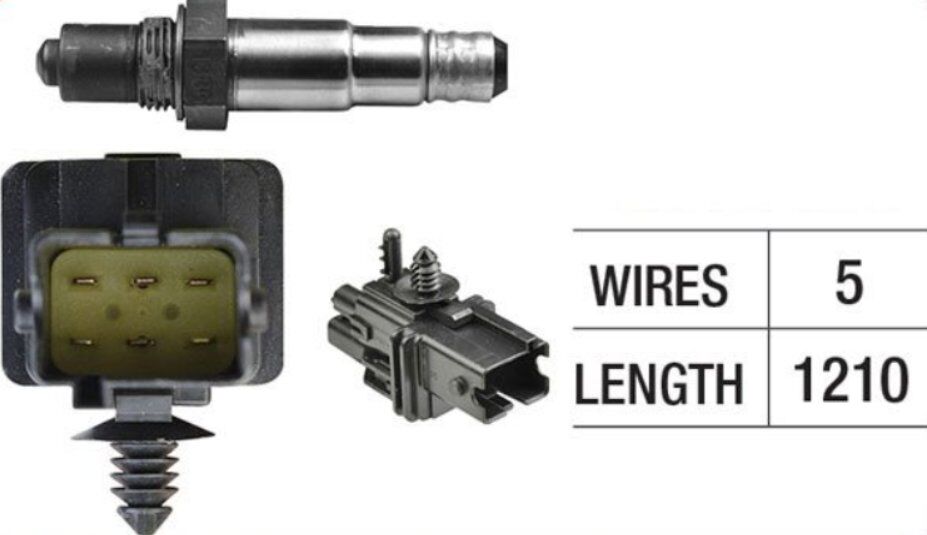
- The connector, wire configuration, cable length and mounting thread match the original component.
- The original equipment part number confirms compatibility.
Important: Different sensor positions can require different specifications even when the vehicle model and engine are identical. Confirming the original part number is the most reliable way to avoid ordering an incompatible component.
Conclusion
The OX786 Oxygen Sensor is listed as a replacement option for selected Porsche 911 Turbo 996 models equipped with the 3.6-litre flat-six 24-valve engine. By monitoring exhaust oxygen levels, a correctly specified sensor supplies important feedback that helps the engine management system regulate fuel delivery and monitor emissions.
If your existing sensor has been diagnosed as faulty, choosing the correct replacement can help restore reliable engine-management feedback and support normal vehicle operation. Before purchasing, verify the VIN, original part number, production date and exact sensor position to ensure the OX786 is suitable for your Porsche 911 Turbo.


Reviews
There are no reviews yet.